


Visual Listing Performance

Visual performance is what a listing's images do, not how they look.

It is the ability of a property's visual presentation to help the right guest understand, trust, desire and choose the stay. It treats images as business communication rather than decoration — which means a photograph can be excellent and still be doing the wrong job.

02The governing premise

A property can have beautiful images and still underperform.

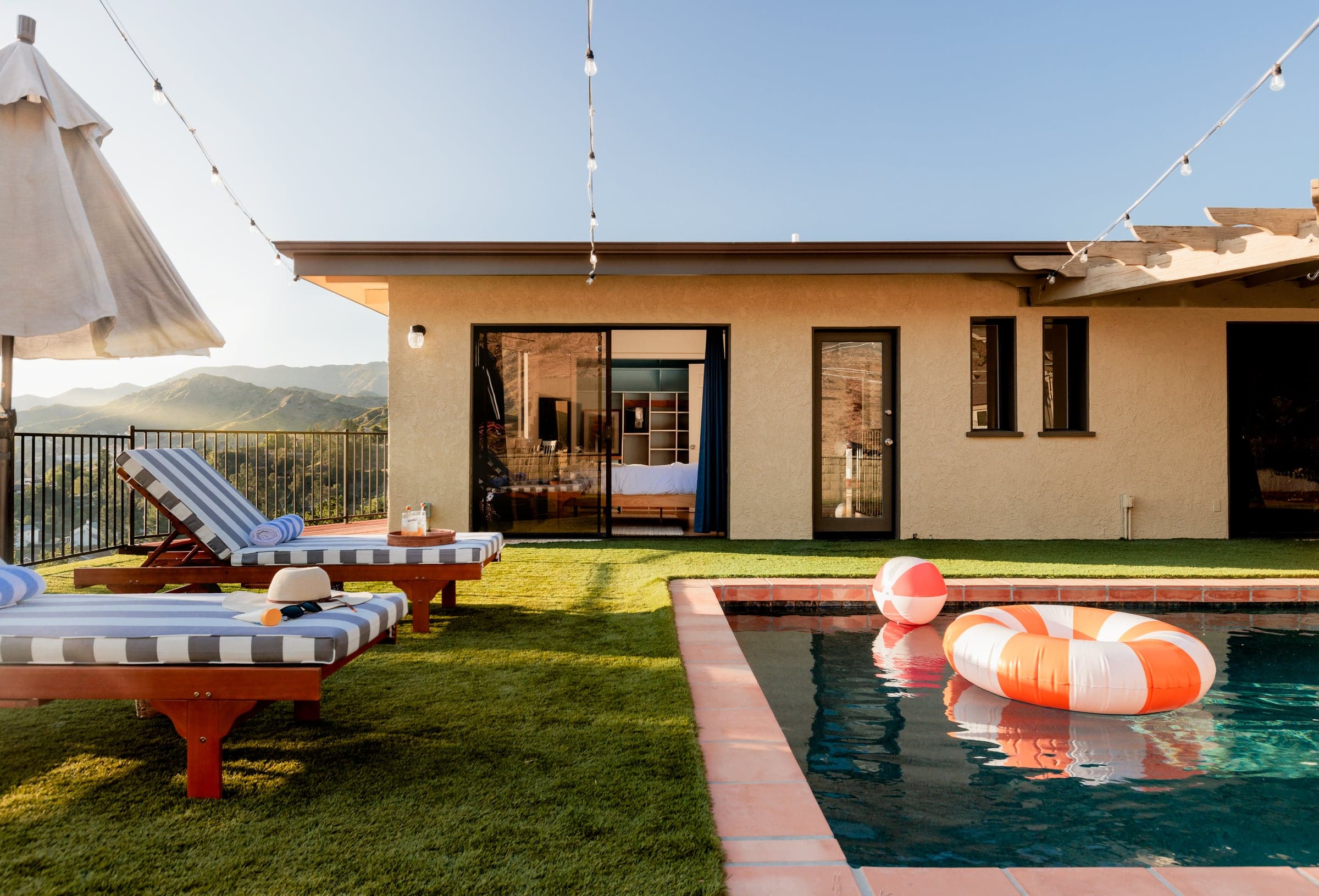
Low evening sun across a lawn and pool, with the house open to a bedroom, two striped loungers to one side, and mountains beyond the railing.
Nothing is wrong with this photograph. It is well made, well lit and well composed. That is exactly the problem worth naming: if beauty alone decided the outcome, this listing would already be finished. The question the model asks is different — what is this image supposed to make a guest understand, and does it.

03Why strategy precedes execution

A photograph is answering questions whether or not anyone chose them.

This is the mechanism the rest of the page depends on. A guest arrives at a listing carrying questions, and every frame either answers one, ignores it, or raises a new one. Deciding which questions matter is strategy. Producing the frames that answer them is execution. Run in that order it works; run backwards it is guesswork with a camera.

Aerial sunset view of a lit house on a wooded slope above Clear Lake, with shoreline homes, water, and ridgelines visible around it.
  • What kind of place is this?

    One lit house on a wooded hillside, framed far enough back to show the surrounding slopes and shoreline.

  • Where does it actually sit?

    Above the water rather than on it — a slope, a road, and a lake that begins below the property.

  • Who is this for?

    Distance and last light read to a guest who wants quiet and a view, not a dock and a marina.

  • What is it not?

    Not waterfront. The frame is honest about the descent between the house and the shoreline, which is trust work as much as scenery.

Now run it backwards: change the question, and a different photograph has to exist.

None of these three frames could be produced by editing the others. Each exists because someone decided, before the shoot, what a guest needed to understand. That decision is the deliverable photography follows.

A freestanding tub beneath a tall arched window filled edge to edge with dense foliage.

Job: answer a question

Shot because guests kept asking how private the tub really is. Every frame in this set is well made; this one was made to close that question.

Overhead view of a curved pool and open lawn around a daybed, with a sun hat and cards left nearby.

Job: prove the pace

Shot to show an afternoon nobody has to plan — so the frame holds empty space and unhurried light rather than a full amenity list.

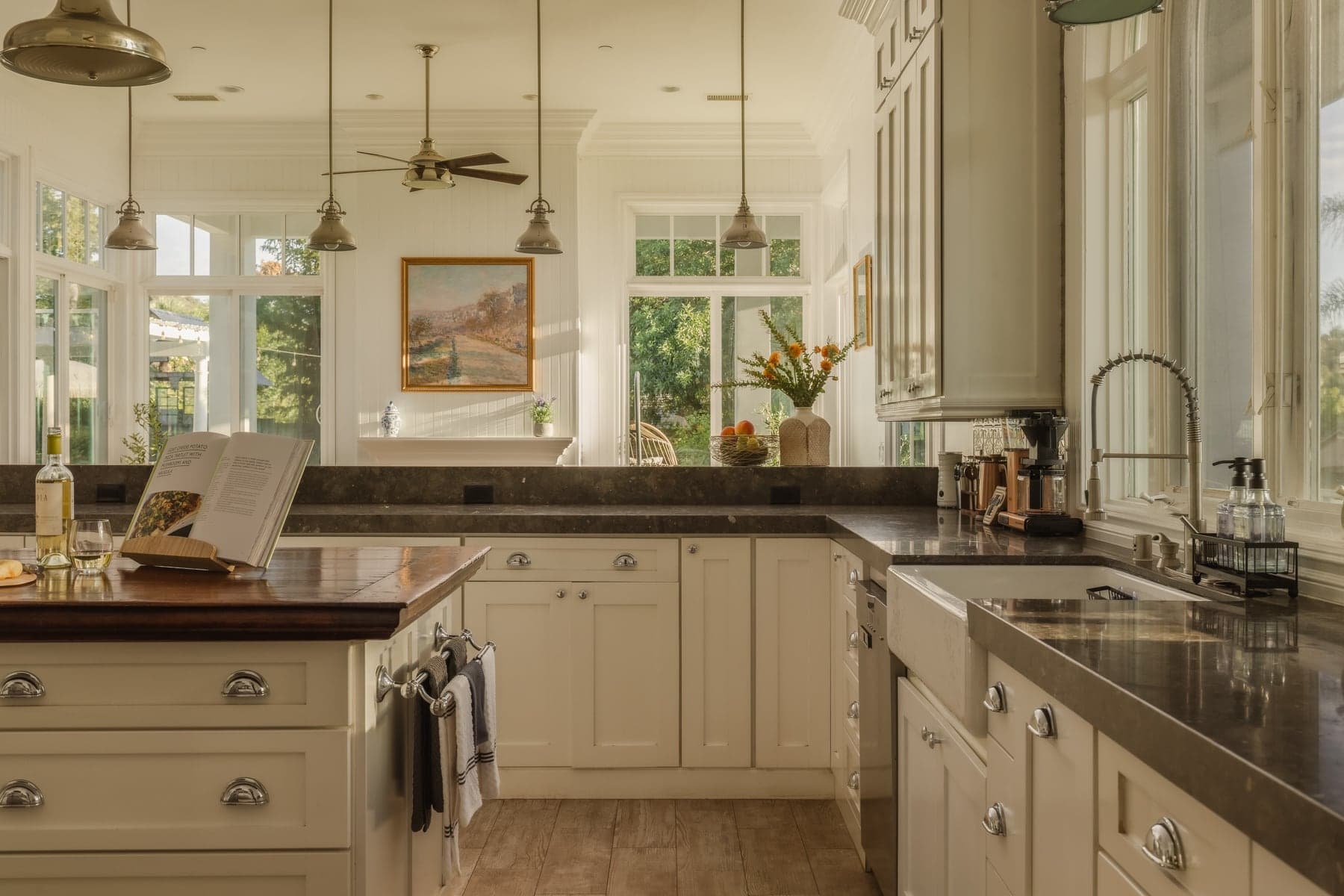
A kitchen seen from the working side of the counter, with an open cookbook and a window above the sink.

Job: separate from the market

Shot from where someone stands to cook, not from the doorway. Every competing listing can show the same appliances; almost none shows the room in use.

04The five performance pillars

What a listing's visual presentation has to accomplish.

These five dimensions describe what a listing's visual presentation must accomplish. Each pairs an owner-facing label with the model term, what it evaluates, and the common failure it is most often found through.

01

First Impression

Whether the first visual impression quickly communicates why the property is worth attention.

Common performance problem

The property may look nice, but the first impression does not create a clear reason to care.

Seen when a listing gets opened and closed without a second swipe.

In the modelFirst Impression and Retreat Promise

02

Photo Order

Whether the visual sequence helps the guest understand the stay.

Common performance problem

The property has strong images, but the sequence feels random, repetitive, or confusing.

Seen when the same room appears three times before the bedroom appears once.

In the modelGallery Flow

03

Unanswered Questions

Whether the visual presentation reduces uncertainty.

Common performance problem

The property may appear appealing, but guests still have unanswered questions.

Seen when the same question keeps arriving in enquiries.

In the modelTrust and Clarity

04

The Right Guest

Whether the visuals speak to the right guest.

Common performance problem

The property attracts views or inquiries, but not the guests most likely to value and book it.

Seen when bookings arrive from guests the property was not built for.

In the modelAvatar Alignment

05

Standing Out

Whether the property becomes meaningfully distinct in its market.

Common performance problem

The property may be high quality, but it blends into the market.

Seen when a listing is compared side by side and nothing separates it.

In the modelVisual Differentiation

05How the pillars interact

Strength in one dimension does not rescue weakness in another.

The pillars are not a checklist to score. They describe a system in which one weak link is enough to stop a booking, which is why a diagnosis has to look at all five before recommending work on any of them.

A listing with a genuinely striking opening image

still loses the guest by the fourth swipe if the sequence repeats itself.

A gallery that flows well

still stalls if the one question a guest is carrying goes unanswered.

A listing that answers every practical question

still attracts the wrong guest if it is speaking to nobody in particular.

A property that is genuinely distinct

still reads as ordinary if the distinction never reaches the first frame.

06How Mario examines the evidence

The pillars describe the problem. This is how the evidence gets examined.

These are not five more dimensions to score — they are four ways of reading what a listing and its market actually show, and one thing produced afterwards. A single lens can expose problems in several pillars at once, and a single pillar usually needs evidence from more than one lens.

Guest Psychology

What does this guest need to believe before they book?

Market Alignment

What does this market's guest already expect?

Visual Hierarchy

What is being seen first, and what is being missed?

Trust Signal

What is left unanswered?

Which produces

Strategic Lesson

Not a fifth way of looking. It is what the analysis leaves behind once the lenses have been applied — the transferable point a property teaches beyond its own listing. It is the output of the method, and it is what a field guide is written to carry.

07Where the model is applied

The model is what the engagements are built on.

It is not a framework that sits beside the work. It decides what a diagnosis looks for, what a strategy contains, and in what order the two happen.

Booking DiagnosticOpportunity AuditPerformance BlueprintConcierge Execution — optional

Diagnosis first, strategy second, and execution only after a strategy exists to execute.

Worked example — a market field guide

Lake Tahoe

A field guide applies the analytical lenses to one market rather than one listing, and closes on the Strategic Lesson. It is the same method at a wider aperture, and it is why a diagnosis can begin before a shoot is ever discussed.

Worked example — the same method, another market

Joshua Tree

A desert market rewards different evidence than an alpine one. The lenses do not change; what they find does. Reading two guides beside each other is the fastest way to see that the method is not a template.

Worked example — a portfolio frame

Our Work

Every frame records what it was made to communicate and which guest it was made for. That is the model applied at the smallest possible scale: one image, one job, one guest.

08Where to start with your own listing

See which of the five your own listing is losing.

The Booking Diagnostic is a short set of questions built directly on the model above. It is the way in.